Best Areas in Orlando for Under $300K Investments 

The Orlando real estate market continues to attract investors globally—and for good reason. With strong population growth, tourism demand, and expanding job opportunities, this market still offers hidden opportunities under $300K if you know where to look.

While the average home value in Orlando sits around $320K, there are still pockets where you can enter below market value and position yourself for strong appreciation.

In this blog, we’ll break down the best neighborhoods and areas under $300K that are primed for growth in 2026.

Why Orlando is Still a Smart Investment in 2026

Orlando is not just a tourist hub—it’s evolving into a major economic center.

Here’s why investors are still bullish:

  • Rapid population growth in Central Florida
  • Strong rental demand driven by tourism and migration
  • Major infrastructure and suburban expansion
  • Increasing home prices due to limited inventory

Even today, there are thousands of properties under $300K, meaning entry is still possible for new investors.

1. Rosemont – Undervalued with Strong Upside

Rosemont is one of the most overlooked areas in Orlando.

Why it stands out:

  • Properties still available under $300K
  • Close proximity to Downtown Orlando
  • Golf course community appeal
  • Increasing investor interest

You can still find homes around the $200K–$300K range, making it ideal for long-term appreciation plays.

Investor angle: Buy now and hold for 3–5 years as redevelopment expands outward from downtown.

2. MetroWest – Rental Demand Goldmine

MetroWest is a proven rental hotspot.

Why investors love it:

  • High tenant demand (young professionals and students)
  • Condo deals still under $300K
  • Established infrastructure

It’s already a known area, but still offers entry-level opportunities compared to premium zones like Lake Nona.

Investor angle: Strong cash flow potential through long-term rentals.

3. Kissimmee – Airbnb & Short-Term Rental Play

Located just outside Orlando, Kissimmee is a powerhouse for short-term rentals.

Why it’s attractive:

  • Close to Disney and major attractions
  • Plenty of townhomes and condos under $300K
  • High tourism-driven occupancy

There are still listings in the $150K–$290K range, especially for condos and townhouses.

Investor angle: Ideal for Airbnb or vacation rental strategies.

4. Pine Hills – High Risk, High Reward

Pine Hills is not for beginners—but for experienced investors, it offers significant upside.

Why it’s interesting:

  • Very low entry prices
  • Increasing redevelopment pressure
  • Growing rental demand

Investor angle: Buy low, renovate, and rent for strong returns.

5. Apopka – The Next Growth Corridor

Apopka is quietly becoming one of the fastest-growing suburbs near Orlando.

Why investors are watching it:

  • New developments and infrastructure
  • Lower prices compared to central Orlando
  • Family-friendly suburban demand

Some areas in and around Apopka still fall within or near the $300K range.

Investor angle: Buy early before suburban expansion drives prices up.

6. Winter Springs – Affordable Yet High Quality

Winter Springs offers a balance between affordability and livability.

Highlights:

  • Strong schools and community appeal
  • Reasonable home prices compared to central Orlando
  • Stable appreciation trends

It’s considered more livable than some lower-cost areas, making it attractive for long-term tenants.

Investor angle: Lower risk, steady appreciation, and reliable tenants.

Final Verdict: Where Should You Invest?

If your budget is under $300K, here’s how to think strategically:

  • Best for appreciation: Rosemont, Apopka
  • Best for cash flow: MetroWest, Pine Hills
  • Best for Airbnb: Kissimmee
  • Best for stability: Winter Springs

Key Insight Most Investors Miss

The biggest mistake beginners make is waiting for the “perfect deal.”

In a competitive market like Orlando, hesitation often costs you more due to appreciation and demand.

The smarter strategy is simple:

  • Buy in emerging areas, not already expensive ones
  • Focus on growth corridors, not hype zones
  • Think 3–5 years ahead, not just today’s price

Conclusion

Orlando still offers rare opportunities under $300K—but they won’t last long.

The investors who win in 2026 are not chasing luxury areas. They’re identifying undervalued neighborhoods before the wave hits.

If you position yourself early in the right location, you’re not just buying property—you’re buying future equity.

The Hidden Costs of Buying Property in Orlando Nobody Talks About (2026 Breakdown)

Buying a home in Orlando sounds exciting—strong investment potential, growing communities, and long-term value.

But most buyers overlook one critical truth:

The purchase price is only part of the total cost.

If you are not aware of the hidden expenses, you could end up paying thousands more than expected.

This 2026 breakdown will help you understand the real costs so you can make a smart and informed decision.

Why Buyers in Orlando Overpay Without Realizing

Most buyers focus on:

  • Down payment
  • Monthly mortgage

But they ignore:

  • Closing costs
  • Insurance
  • Taxes
  • Maintenance

This is where financial surprises happen.

The Real Hidden Costs of Buying Property in Orlando

1. Closing Costs (2%–5% of the Home Price)

This is one of the biggest overlooked expenses.

It includes:

  • Loan origination fees
  • Title insurance
  • Appraisal fees
  • Legal or processing fees

Example:
On a $400,000 home, closing costs can range from $8,000 to $20,000.

2. Property Taxes

Property taxes in Orlando can vary depending on the location and home value.

Important note:
Taxes can increase after purchase due to reassessment.

3. Homeowners Insurance

Insurance costs in Florida are higher due to weather risks.

Typical range:

  • $2,000 to $5,000 per year

These costs have been increasing in recent years.

4. HOA Fees

Many communities in Orlando have HOA fees.

Monthly range:

  • $50 to $400 or more

These fees cover:

  • Community maintenance
  • Amenities
  • Neighborhood management

Maintenance and Repairs

Every property requires upkeep.

A general estimate:
1%–2% of the home value per year

For a $400,000 home:
$4,000–$8,000 annually.

Private Mortgage Insurance (PMI)

If your down payment is less than 20%, you will likely pay PMI.

Monthly cost:

  • $100 to $400

Moving and Setup Costs

Often ignored, but significant:

  • Moving services
  • Furniture purchases
  • Utility setup

Estimated range:
$2,000–$10,000 or more.

8. Interest Rate Impact

Even a small increase in interest rates can cost thousands over time.

This is a long-term hidden cost many buyers underestimate.

Real Example (Orlando Buyer in 2026)

Home Price: $400,000

Additional costs:

  • Closing: $12,000
  • Insurance: $3,000/year
  • Taxes: $4,500/year
  • Maintenance: $5,000/year

Total additional cost in the first year:
$24,500 or more.

How to Avoid These Hidden Costs

Smart buyers take these steps:

  • Get a full cost breakdown before purchasing
  • Work with a local expert
  • Plan beyond the purchase price
  • Compare insurance options
  • Understand HOA rules before committing

Final Thoughts

Buying property in Orlando can be a strong financial decision.

However, success depends on understanding the full cost—not just the listing price.

The most successful buyers are not the fastest.
They are the most informed.

FAQ – Buying Property in Orlando (2026)

How much are closing costs in Orlando?

Closing costs typically range from 2% to 5% of the home price.

Is homeowners insurance expensive in Orlando?

Yes, due to Florida’s risk factors, insurance can range from $2,000 to $5,000 or more annually.

Are HOA fees common in Orlando?

Yes, especially in planned communities and newer developments.

What is the biggest hidden cost buyers miss?

Insurance and maintenance combined are often underestimated.

Is Orlando still a good place to invest in 2026?

Yes, but only with proper cost planning and local market understanding.

NAP (Name, Address, Phone)

Fabiola Meneses
Wemert Group Realty
Orlando, Florida, United States
Phone: +1 321-522-7330
Website: www.fabiinorlando.com

CTA (Call-To-Action)

If you are planning to buy a home in Orlando, make sure you understand the full cost before making a decision.

Contact Fabiola Meneses at +1 321-522-7330 or visit www.fabiinorlando.com to get expert guidance and avoid costly mistakes.

Why Orlando Is Attracting Out-of-State Investors

1. Strong Population Growth and Migration Trends

Orlando continues to experience massive population growth driven by domestic migration. People are relocating from high-cost states like California and New York in search of:

  • Lower cost of living
  • No state income tax
  • Better quality of life

For investors, this translates into one thing: consistent housing demand.

More people moving in means more renters, more buyers, and more long-term appreciation potential.

2. Favorable Tax Environment

Florida’s tax structure is one of the biggest incentives for out-of-state investors.

  • No state income tax
  • Investor-friendly policies
  • Lower operational costs compared to many other states

Investors from high-tax states immediately see higher net returns when shifting their portfolios to Florida.

3. Strong Rental Market (Short-Term + Long-Term)

Orlando is unique because it offers two powerful rental strategies:

Short-Term Rentals (Airbnb / Vacation Homes)

  • Driven by tourism (Disney, Universal, etc.)
  • High nightly rates
  • Seasonal demand spikes

Long-Term Rentals

  • Stable tenant demand
  • Growing workforce population
  • Reliable cash flow

This dual-income potential makes Orlando extremely attractive compared to markets that rely on only one rental model.

4. Relatively Affordable Entry Prices (Compared to Major Cities)

To a local buyer, $500K–$700K might feel expensive.

To an investor from California or New York, that same property looks like a discount.

Out-of-state investors often come with:

  • Higher purchasing power
  • Larger down payments
  • Ability to pay cash

This gives them a major advantage in competitive situations.

5. Appreciation Potential + Infrastructure Growth

Orlando continues to expand with:

  • New developments
  • Job growth
  • Infrastructure upgrades
  • Expanding suburban communities

Investors are betting on long-term appreciation, not just short-term cash flow.

The Problem for Local Buyers and Investors

Because of this surge, the market has become:

  • More competitive
  • Faster-moving
  • Less forgiving

You’re now competing against investors who:

  • Make decisions quickly
  • Submit strong offers immediately
  • Often waive contingencies
  • Are not emotionally attached

If you’re unprepared, you will lose deals—consistently.

How to Compete With Out-of-State Investors

Now let’s talk strategy.

1. Move Faster Than the Market

Speed is everything.

Out-of-state investors often make offers within hours of a property hitting the market.

To compete:

  • Get pre-approved (or have proof of funds ready)
  • Analyze deals quickly
  • Be ready to submit offers the same day

Hesitation = lost deals

2. Work With a Local Market Expert

Out-of-state investors rely heavily on local agents who understand:

  • Micro-neighborhood trends
  • Off-market opportunities
  • Pricing strategies

You need the same advantage.

A strong local agent can help you:

  • Find deals before they go public
  • Avoid overpaying
  • Identify undervalued properties

3. Target “Overlooked” Opportunities

Most investors chase the same types of properties:

  • Fully renovated homes
  • Turnkey Airbnbs
  • Prime tourist locations

Instead, look for:

  • Properties needing light cosmetic updates
  • Emerging neighborhoods
  • Long-term rental zones with strong demand

Less competition = better deals.

4. Make Cleaner, Stronger Offers

Out-of-state investors win because their offers are simple and attractive.

To compete:

  • Minimize contingencies when possible
  • Increase earnest money deposit
  • Offer flexible closing timelines

Sellers prefer certainty over slightly higher offers.

5. Understand the Numbers Better Than Everyone Else

Serious investors don’t guess—they calculate.

Before making an offer, analyze:

  • Cash flow
  • Cap rate
  • ROI
  • Repair costs
  • Rental projections

If you can confidently evaluate deals faster than others, you gain a major edge.

6. Consider Creative Strategies

If traditional buying isn’t working, think differently:

  • Off-market deals
  • Direct-to-seller outreach
  • Partnerships
  • Seller financing

Out-of-state investors are aggressive—you need to be strategic.

7. Build Relationships (This Is Underrated)

Many deals never hit Zillow.

They are sold through:

  • Agent networks
  • Investor connections
  • Private deals

Build relationships with:

  • Realtors
  • Wholesalers
  • Property managers

The best opportunities often come through people, not platforms.

Key Takeaways

  • Orlando is one of the hottest real estate markets in the U.S.
  • Out-of-state investors are driving competition and prices
  • They bring capital, speed, and experience
  • But you can still win with the right strategy

Final Thoughts

The rise of out-of-state investors in Orlando isn’t a temporary trend—it’s the new reality.

Trying to compete without adapting will only lead to frustration.

But if you:

  • Move quickly
  • Understand the market deeply
  • Build the right network
  • Make smart, strategic offers

You can still secure profitable deals—even in a highly competitive environment.

If you want help finding investment opportunities or building a winning strategy in Orlando, working with a knowledgeable local expert can make all the difference.

Orlando Real Estate Market Forecast 2026–2027

A Data-Driven Outlook for Investors, Buyers, and Sellers

Introduction: A Market Reset, Not a Crash

The Orlando real estate market is entering a new phase of stability and normalization after the volatility of 2020–2024. As we move through 2026 and into 2027, the market is no longer driven by rapid price surges or bidding wars. Instead, it is becoming more balanced, predictable, and opportunity-driven.

This shift creates a unique window for smart investors and long-term buyers who understand how to navigate a transitioning market.

Orlando Housing Market Snapshot (2026)

  • Median home price: ~$379K – $385K
  • Average home value: ~$374K (down approximately 3–4% year-over-year)
  • Days on market: ~40–70 days
  • Inventory: ~4.5–6.8 months (balanced market)

After a period of correction in 2025, Orlando has entered 2026 with price stabilization and improving buyer conditions.

Key Trends Shaping the Market (2026)

1. Price Stabilization with Modest Growth

Home prices are expected to grow at a slow and sustainable pace of 2%–5% annually.

This is a major shift from the rapid growth seen during the pandemic years and indicates a healthier long-term market cycle.

2. Inventory Is Rising (Buyer Advantage)

Housing supply has increased significantly, giving buyers more choices, greater negotiation power, and less competition.

Inventory growth has pushed the market toward a balanced or slightly buyer-leaning environment.

3. Market Correction Already Happened

Prices declined in 2025 and early 2026 due to higher interest rates, reduced affordability, and increased supply.

Current forecasts suggest a rebound phase rather than further decline.

4. Strong Long-Term Demand Drivers

Despite short-term cooling, Orlando remains fundamentally strong due to continued population growth, a thriving tourism economy, infrastructure development, and job creation.

Large-scale developments and investments are expected to further boost demand and economic activity.

5. Affordability Challenges Remain

Housing affordability continues to be a concern. Mortgage rates remain relatively elevated, and rising insurance and living costs are putting pressure on buyers, particularly first-time purchasers.

Orlando Real Estate Forecast 2026–2027

2026 Outlook: Stabilization Year

  • Prices: Flat to 3% growth
  • Inventory: Increasing
  • Demand: Moderate
  • Market type: Balanced

2026 is a transition year where the market stabilizes and becomes more sustainable.

2027 Outlook: Gradual Growth Returns

  • Prices: 3% to 5% appreciation
  • Demand: Strengthens as interest rates stabilize
  • Investor activity: Increases
  • Rental market: Remains strong

By 2027, Orlando is expected to move into a steady growth cycle supported by economic expansion and renewed buyer confidence.

Rental Market Outlook

The rental market remains one of Orlando’s strongest segments. Demand is supported by population growth and tourism, along with continued interest in both long-term and short-term rental properties.

However, rent growth may slow slightly due to increasing supply, aligning with broader national trends.

What This Means for Investors

Opportunities

  • Better deals due to reduced competition
  • Increased negotiation leverage
  • Long-term appreciation potential
  • Strong rental demand

Risks

  • Slower short-term returns
  • Higher holding costs (insurance, taxes)
  • Ongoing economic uncertainty

Strategy should focus on cash flow and long-term equity rather than quick resale profits.

What This Means for Buyers and Sellers

Buyers

Buyers now benefit from increased inventory, reduced competition, and greater flexibility in negotiations. This period presents a strong opportunity to enter the market strategically.

Sellers

Homes are still selling, but pricing accuracy is critical. Overpriced listings tend to remain on the market longer, making proper positioning and marketing essential.

Key Takeaways

  • The Orlando market is stabilizing, not declining
  • Price growth will be slow but steady
  • Inventory levels are rising, favoring buyers
  • Long-term fundamentals remain strong
  • 2027 may mark the beginning of the next growth phase

Final Verdict

The Orlando real estate market in 2026–2027 is shifting toward a more sustainable and fundamentals-driven environment. It is no longer a rapid-growth market but a strategic, long-term investment opportunity.

For investors and buyers who approach it with the right strategy, this phase offers stability, predictability, and meaningful long-term potential.

Long-Term vs Short-Term Rentals in Orlando: Which One Wins in 2026?

By Fabiola Meneses | Orlando Real Estate Expert

Description:
Discover whether long-term or short-term rentals in Orlando deliver better ROI in 2026. Compare cash flow, risks, and strategies to maximize your investment.

Why This Debate Matters in 2026

Orlando continues to be one of the most attractive real estate markets in the U.S., driven by tourism, population growth, and major developments like Walt Disney World expansions. This creates a unique opportunity for investors—but also a critical decision:

Should you go for stable long-term rentals or high-income short-term rentals (Airbnb-style)?

In 2026, the answer is no longer obvious.

The market has shifted. Profitability now depends on strategy, not just location.

Orlando Market Snapshot (2026)

Before comparing both strategies, here’s what’s happening in the market:

  • Average rent: approximately $1,950/month
  • Rents have slightly declined after years of growth
  • Vacancy rates remain relatively high, favoring tenants
  • Short-term rentals generate around $32K–$38K annually
  • The short-term rental market is becoming more competitive and operationally demanding

In simple terms:
Long-term rentals offer more stability, while short-term rentals offer higher income potential with increased complexity.

What Are Long-Term Rentals?

Long-term rentals involve leasing a property for 6–12 months or more to a single tenant.

Pros of Long-Term Rentals

  • Stable monthly income
  • Lower management effort
  • Fewer operational costs (cleaning, furnishing, etc.)
  • Less exposure to tourism fluctuations

Cons of Long-Term Rentals

  • Limited income potential
  • Slower rent growth in 2026
  • Tenant-related risks such as late payments or vacancies

With rents stabilizing, investors need to focus on tenant retention and competitive pricing.

What Are Short-Term Rentals?

Short-term rentals are typically listed on platforms like Airbnb and rented nightly or weekly.

Pros of Short-Term Rentals

  • Higher income potential
  • Flexibility for personal use
  • Dynamic pricing opportunities
  • Strong demand driven by tourism

Average annual revenue ranges between $30,000 and $38,000 depending on performance.

Cons of Short-Term Rentals

  • High management effort
  • Furnishing and maintenance costs
  • Seasonal income fluctuations
  • Increased competition

In 2026, success depends heavily on design, marketing, and guest experience.

Head-to-Head Comparison (2026)

FactorLong-Term RentalsShort-Term Rentals
Income StabilityHighMedium
Income PotentialMediumHigh
Management EffortLowHigh
Risk LevelLow–MediumMedium–High
Market Trend 2026StabilizingCompetitive
Vacancy ImpactModerateHigh (seasonal)

Which One Makes More Money in 2026?

Long-Term Example:

  • $1,950/month × 12 = approximately $23,400/year

Short-Term Example:

  • Approximately $32,000–$38,000/year

Short-term rentals can generate 30–60% higher revenue.

However, higher revenue does not automatically mean higher profit.

You must account for:

  • Cleaning costs
  • Platform fees
  • Furnishing expenses
  • Vacancy periods

The Hidden Truth Most Investors Miss

In 2026, the real winner is not just short-term or long-term rentals.

It is operational efficiency and strategy.

Here’s what successful investors are doing:

1. Hybrid Strategy

Using short-term rentals during peak tourist seasons and switching to mid-term or long-term rentals during slower periods.

2. Strategic Location Selection

Properties near tourist attractions perform better as short-term rentals, while suburban areas are more suited for long-term tenants.

3. Treating Rentals Like a Business

Investors are focusing on branding, optimizing listings, and using pricing tools to maximize performance.

Which One Wins in 2026?

Short-term rentals are better if you want higher income and are willing to manage operations or hire a team.

Long-term rentals are better if you prefer stable, predictable income with lower involvement.

Final Verdict

Short-term rentals outperform in terms of income potential.
Long-term rentals provide more stability and lower risk.

The most effective approach in 2026 is combining both strategies through a hybrid model and strong execution.

Call to Action

Thinking about investing in Orlando real estate?
Get a personalized strategy based on your budget, goals, and risk tolerance.

Contact us today to start building a profitable real estate portfolio.

Is Orlando Real Estate Still Worth It in 2026? (Honest Breakdown)

By Fabiola Meneses | Orlando Real Estate Expert

 Description:
Is Orlando real estate still a good investment in 2026? Discover the latest market trends, risks, ROI potential, and expert insights before you invest.

Orlando Real Estate Market in 2026: What’s Really Happening?

The Orlando real estate market in 2026 is no longer in the explosive growth phase seen between 2020–2022. Instead, it has shifted into a more balanced and realistic market.

  • The average home value is around $374,000, down approximately 3.5% year-over-year
  • Median home prices have also seen declines of up to 7–8% in some months
  • Homes are taking longer to sell, showing reduced buyer urgency

At first glance, this may seem concerning, but experienced investors view it differently.

This shift is not a crash. It is a market correction and stabilization phase.

Why Prices Are Cooling Down

Several factors are reshaping Orlando’s housing market:

1. Higher Interest Rates

Mortgage rates around 6% or higher are reducing affordability and slowing demand.

2. Rising Inventory

There are more homes available compared to previous years, giving buyers stronger negotiating power.

3. Post-Boom Correction

After rapid growth during the COVID migration period, the market is normalizing.

Some forecasts suggest slight price declines in Florida during 2026, reinforcing this stabilization trend.

Why Orlando Still Has Strong Potential

Despite short-term slowdowns, Orlando remains one of the strongest long-term real estate markets in the United States.

1. Population Growth and Migration

Orlando continues attracting remote workers, retirees, and international investors, sustaining housing demand.

2. Tourism and Economic Strength

The city’s tourism industry and ongoing large-scale investments continue to drive economic activity.

3. Job Market Growth

Infrastructure and development projects are creating jobs, increasing demand for both rentals and homeownership.

4. Long-Term Appreciation

Experts project steady long-term appreciation, typically around 3–5% annually, with modest short-term growth.

This indicates stability rather than rapid gains.

Rental Market: Still Profitable?

Orlando remains a strong rental market due to:

  • Year-round tourism
  • Population growth
  • High demand for housing

Opportunities remain strong in:

  • Short-term vacation rentals
  • Multifamily units
  • Affordable housing segments

Even with price stabilization, rental demand continues to perform well.

Risks to Consider

Orlando is no longer a guaranteed win, and investors should be aware of key risks:

1. Slower Appreciation

Rapid equity gains and quick flips are far less common.

2. Rising Costs

Investors face higher insurance premiums, property taxes, and maintenance costs.

3. Longer Selling Timelines

Properties are staying on the market longer, reducing liquidity.

4. Location-Based Performance

Some areas are still growing, while others are experiencing declines.

This is now a skill-based market that requires careful analysis.

Who Should Invest in 2026?

Suitable for:

  • Long-term investors (5–10 years or more)
  • Rental income-focused buyers
  • Investors seeking negotiation opportunities

Not suitable for:

  • Short-term flippers
  • Speculative buyers
  • Beginners expecting fast returns

Final Verdict: Is It Still Worth It?

Yes, but only with the right strategy.

Orlando in 2026 is no longer a hype-driven market. It is a strategic investor’s market.

The opportunity has shifted from buying anything to making well-informed, calculated investments.

Bottom Line

Orlando real estate remains a viable investment if you focus on fundamentals:

  • Purchase below market value
  • Prioritize consistent cash flow
  • Target high-demand locations
  • Maintain a long-term perspective

In this type of market, disciplined investors succeed while others exit.

Biggest Mistakes Investors Are Making in Orlando in 2026

By Fabiola Meneses | Orlando Real Estate Expert

Description:
Discover the biggest mistakes real estate investors are making in Orlando in 2026—and how to avoid them to maximize ROI, cash flow, and long-term appreciation.

Why Orlando Still Attracts Investors in 2026

Orlando continues to be one of the most attractive real estate markets in the U.S. for several reasons:

  • Strong population growth and migration
  • High rental demand driven by tourism and job growth
  • Ongoing infrastructure and development projects
  • A market transitioning toward stability and long-term opportunity

However, the 2026 market is very different from the rapid-growth phase of 2021–2022. The easy gains are gone, and investors now need a more strategic approach.

1. Treating Orlando Like a Boom Market

Many investors still assume Orlando is in a rapid appreciation phase.

In reality:

  • Price growth is modest
  • The market is stabilizing rather than surging

Mistake: Buying based only on appreciation
Smart Move: Focus on cash flow and long-term value

2. Overpaying for Properties

Some investors are still making offers based on outdated market conditions.

Today’s market offers:

  • More inventory
  • Better negotiation opportunities
  • Less competition compared to peak years

Mistake: Overbidding due to fear of missing out
Smart Move: Purchase below market value with a clear margin

3. Ignoring Deal Analysis

In 2026, guessing leads to losses.

Common issues:

  • Not calculating ROI accurately
  • Ignoring vacancy rates
  • Underestimating operating expenses

Mistake: Relying on assumptions
Smart Move: Use metrics like cap rate, cash-on-cash return, and net operating income

4. Underestimating Insurance and Hidden Costs

Florida investors face rising costs that directly impact profitability:

  • Property insurance
  • Maintenance and repairs
  • HOA fees
  • Property taxes

Mistake: Only considering mortgage payments
Smart Move: Calculate the full cost of ownership before investing

5. Choosing the Wrong Location

Not all areas in Orlando perform equally.

Poor decisions often involve:

  • Buying based only on low price
  • Ignoring rental demand trends
  • Missing high-growth areas

Mistake: Assuming cheaper properties are better investments
Smart Move: Focus on demand-driven locations with strong fundamentals

6. Trying to Time the Market

Many investors delay decisions waiting for the perfect opportunity.

Current outlook:

  • Stability is expected rather than a major crash
  • The market may already be near its bottom

Mistake: Waiting indefinitely for perfect timing
Smart Move: Invest when the numbers make sense

7. Ignoring the Need for Strategy

The market has shifted significantly.

Old mindset:
Buy anything and rely on appreciation

New reality:
Success requires careful planning, data analysis, and execution

Mistake: Operating without a clear investment strategy
Smart Move: Build a data-driven investment plan

8. Not Adapting to a Buyer-Friendly Market

Orlando is becoming more favorable for buyers due to:

  • Increased inventory
  • Longer time on market
  • More negotiation leverage

Mistake: Acting like it is still a seller’s market
Smart Move: Negotiate strategically and take advantage of market conditions

9. Ignoring Long-Term Trends

Short-term thinking can limit long-term success.

Orlando continues to benefit from:

  • Strong tourism industry
  • Job growth
  • Population expansion

Mistake: Focusing only on short-term gains
Smart Move: Invest with a long-term perspective

Final Thoughts: How Smart Investors Win in 2026

The key difference in 2026 is discipline.

Successful investors:

  • Focus on cash flow
  • Analyze every deal carefully
  • Choose locations with strong demand
  • Account for all expenses
  • Maintain a long-term vision

Want Help Finding Profitable Deals in Orlando?

If you are looking for:

  • Data-driven deal analysis
  • High-ROI property opportunities
  • A clear investment strategy

Connect to explore the right opportunities and build a strong real estate portfolio.

Is It a Good Time to Buy or Rent in Greater Orlando Right Now?

Is It a Good Time to Buy or Rent in Greater Orlando Right Now?

If you plan to stay in Greater Orlando for more than a few years, buying typically makes more long-term financial sense than renting. Renting offers flexibility and lower upfront costs, but buying builds equity, stabilizes your housing payment, and positions you for appreciation over time. The right decision depends on your timeline, income stability, and lifestyle goals.

Is It Better to Buy or Rent in Greater Orlando?

  • Buy if you plan to stay 3+ years and want to build equity.
  • Rent if you need flexibility or may relocate soon.
  • Buying stabilizes your monthly payment with a fixed-rate mortgage.
  • Renting avoids maintenance responsibility and upfront closing costs.
  • Orlando’s long-term growth historically favors ownership over time.

There isn’t a universal answer. But there is a financially strategic one based on your situation.

Greater Orlando continues to attract new residents due to job growth, tourism expansion, healthcare investment, and population migration from higher-cost states. That consistent demand supports long-term housing stability — which matters when you’re deciding whether to rent or buy.

What Makes Buying in Orlando Attractive Right Now?

When you buy, you lock in your housing cost. With rent, your payment can increase annually. In many Orlando communities, rental rates have risen steadily over the past several years due to demand.

Buying also allows you to:

  • Build equity instead of paying a landlord
  • Benefit from long-term appreciation
  • Customize your home
  • Create payment predictability
  • Take advantage of homestead tax benefits (if primary residence)

Even in higher interest rate environments, buyers can refinance later. Renters cannot “refinance” their lease.

Orlando’s economy is diversified — tourism, tech, healthcare, aerospace, and education all contribute to long-term demand. That demand underpins housing resilience.

When Renting in Orlando Might Make More Sense

Renting is not a mistake. It’s a strategy — when used intentionally.

Renting may be smarter if:

  • You’re relocating and unsure which neighborhood fits long term
  • You expect a job change within 1–2 years
  • You’re rebuilding credit
  • You want zero maintenance responsibility
  • You need maximum short-term flexibility

In fast-growing areas like Lake Nona, Winter Garden, and Horizon West, some buyers rent first to understand commute patterns, school zones, and lifestyle differences before committing.

Short-term clarity can prevent long-term regret.

Financial Comparison: Stability vs Flexibility

Here’s how the decision often breaks down financially:

Buying:

  • Upfront costs (down payment + closing costs)
  • Fixed principal & interest payment (if fixed-rate loan)
  • Property taxes and insurance
  • Maintenance responsibility
  • Equity accumulation

Renting:

  • Lower upfront cost
  • No maintenance costs
  • No property taxes
  • No equity growth
  • Exposure to rent increases

If you stay long enough, ownership typically outpaces renting financially due to equity growth and appreciation.

The key variable is time.

Important Considerations Buyers Often Overlook

  • Insurance costs in Florida can vary significantly by property type.
  • HOA fees differ widely across Orlando communities.
  • New construction incentives may offset higher rates.
  • Resale liquidity depends heavily on location and price point.
  • Property taxes can reset after purchase.

These factors don’t make buying bad — they make professional guidance important.

FAQ

Is Orlando still a strong real estate market?
Orlando remains one of Florida’s consistent growth markets due to job expansion and population migration, which supports long-term housing demand.

Will home prices drop in Orlando?
Short-term fluctuations happen, but long-term pricing trends in growth metros tend to remain stable due to demand and limited housing supply.

How long should I plan to stay if I buy?
Most financial models suggest 3–5 years to offset transaction costs and benefit from appreciation.

Next Steps

If you’re trying to decide whether buying or renting makes more sense for your situation, the smartest move is running the numbers based on your income, timeline, and goals — not headlines.

Call (321) 522-7330 and we’ll break it down clearly so you can make the right decision with confidence.

Meet Fabiola Meneses

I’m a bilingual Orlando REALTOR®, and I’ve been helping families navigate the Central Florida market since 2014. Buying a home is a major investment, and I believe you deserve more than just a tour guide—you need a strategist.

With a background in civil engineering, I provide my clients with a unique advantage: a technical eye for construction and a precise, data-driven approach to negotiations. I don’t just look at the floor plan; I look at the “hidden” details—from infrastructure assessments to the structural factors that impact your long-term costs.

Whether you are selling or buying a home in Orlando, my goal is to ensure you aren’t just getting a high offer, but the right offer for your future. Don’t leave your home sale or purchase to chance.

Hidden Costs of Buying a Home in Orlando That No One Talks About

Buying a home in Orlando, Florida is exciting—but many buyers are surprised by costs they didn’t plan for. As a local Orlando real estate agent, I believe informed buyers make the best decisions.

Here are the hidden costs of buying a home in Orlando that every buyer should understand.

Property Taxes After Purchase

In Florida, property taxes are reassessed after a home is sold. This means the tax bill you see online is often lower than what you’ll actually pay after closing.

This surprises many first-time buyers in Orlando.

CDD Fees in Newer Communities

Community Development District (CDD) fees are common in newer Orlando neighborhoods. These fees help pay for infrastructure and are added to your annual tax bill.

They can range from hundreds to several thousand dollars per year.

Homeowners Insurance Costs

Florida insurance is not one-size-fits-all. Factors like roof age, flood zones, and wind mitigation reports can significantly impact your premium.

HOA Fees & Special Assessments

Monthly HOA fees add up quickly. Some communities also charge special assessments for repairs or improvements.

Closing Costs Beyond the Down Payment

Many buyers focus only on the down payment and forget about closing costs, which typically range from 2–4% of the purchase price in Orlando.

How I Help Buyers Avoid Surprises

When I work with buyers, I walk them through the true cost of ownership before they make an offer.

If you’re planning to buy a home in Orlando, FL and want clarity before committing, I’m here to help.

Frequently Asked Questions

How much should I realistically save for closing costs? In the Orlando market, you should budget between 2% and 4% of the home’s purchase price. For a $450,000 home, this means having $9,000–$18,000 set aside in addition to your down payment to cover title insurance, loan origination fees, and escrowed taxes.

Is flood insurance mandatory in Orlando? It depends on your specific Flood Zone. While Florida is known for water, many parts of Orlando are in “Zone X” (low risk), where lenders don’t require it. However, if the home is near one of our many lakes or in a high-risk basin, your lender will require a separate policy.

What is a “Wind Mitigation” report, and do I need one? In Florida, this is a specialized inspection that looks at how your roof is attached to the walls. It is highly recommended! A good report can save you hundreds (or even thousands) on your annual homeowners insurance premiums.

How do I know if a home has a CDD fee before I visit? CDD fees are usually listed in the “Tax Information” or “Association Information” section of an MLS listing. If you aren’t sure, I can pull the detailed tax record for any property to show you exactly what the annual assessment looks like.

Can HOA fees change after I buy the house? Yes. HOA boards can vote to increase monthly dues to keep up with inflation or community maintenance. It is always wise to review the HOA’s financial reserves during your inspection period to ensure they have enough money for future repairs.

Meet Fabiola Meneses

I’m a bilingual Orlando REALTOR® with Wemert Group Realty, and I’ve been helping families navigate the Central Florida market since 2014. Buying a home is a major investment, and I believe you deserve more than just a tour guide—you need a strategist.

With a background in civil engineering, I provide my clients with a unique advantage: a technical eye for construction and a precise, data-driven approach to negotiations. I don’t just look at the floor plan; I look at the “hidden” details—from infrastructure assessments to the structural factors that impact your long-term costs.

Whether you are selling or buying a home in Orlando, my goal is to ensure you aren’t just getting a high offer, but the right offer for your future. Don’t leave your home sale or purchase to chance.

Let’s work together to find a path that truly meets your financial goals.

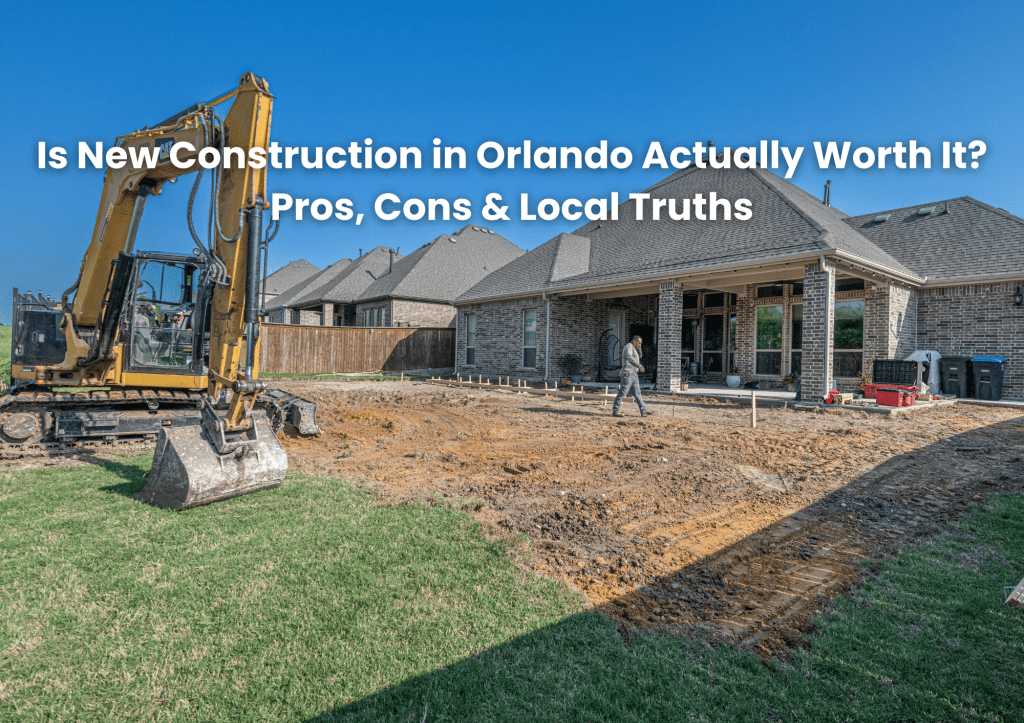
Is New Construction in Orlando Actually Worth It? Pros, Cons & Local Truths

New construction homes are everywhere in Orlando, Florida—but are they really worth it? As an Orlando real estate agent who works with both resale and new construction buyers, I always say: it depends.

Let’s talk honestly about the pros and cons of buying a new construction home in Orlando.

The Pros of New Construction in Orlando

Builder Incentives

Many builders offer incentives like closing cost assistance or rate buydowns, which can be attractive in today’s market.

Modern Design & Energy Efficiency

New homes often include open layouts, energy-efficient features, and modern finishes that buyers love.

The Cons Buyers Don’t Expect

Higher Base Prices Than Advertised

The advertised price rarely includes upgrades, lot premiums, or structural options.

Long Build Timelines

Construction delays are common due to permits, materials, or weather.

HOA and CDD Fees

Most new construction communities in Orlando come with HOA and CDD fees, which increase monthly expenses.

Who New Construction Is Best For

New construction works best for buyers who:

  • Are flexible on timelines
  • Want low maintenance
  • Plan to stay long-term

Frequently Asked Questions:

1. Are new construction homes in Orlando cheaper than resale right now?

The SEO Focus: Orlando new construction vs. resale prices The Answer: Surprisingly, yes. In 2026, the median price for new builds in Central Florida has stayed competitive—and often lower—than existing homes. This is largely due to builders increasing inventory in areas like St. Cloud and Davenport to meet demand. While a resale home may have a lower “sticker price,” once you factor in the cost of a new roof, HVAC repairs, and higher insurance premiums for older Florida homes, new construction often provides a better total value.

2. What builder incentives are available for Orlando new homes in 2026?

The SEO Focus: Orlando home builder incentives / mortgage rate buydowns The Answer: To stay competitive, Orlando builders are currently offering aggressive financial packages. The most popular 2026 incentives include permanent interest rate buydowns (often bringing rates into the 5% range), and closing cost credits ranging from $10,000 to $25,000. Some builders in master-planned communities like Lake Nona or Winter Garden are also including “flex cash” that can be used for design center upgrades or to reduce the home’s sales price.

3. Is new construction in Florida better for homeowners insurance?

The SEO Focus: New construction Florida insurance savings / hurricane building codes The Answer: Absolutely. Because new Orlando homes are built to the latest Florida Building Codes, they qualify for significant “wind mitigation” discounts. Features like hurricane straps, impact-resistant windows, and reinforced garage doors make these homes much cheaper to insure than homes built before 2002. In many cases, insurance for a new build can be 30–50% less than a similarly sized resale property, saving you thousands of dollars annually.

4. What are the hidden costs of buying a new home in Central Florida?

The SEO Focus: Hidden costs of new construction / Orlando CDD fees The Answer: The biggest “hidden” cost in Orlando is the CDD fee (Community Development District), common in newer areas like Horizon West. This fee covers neighborhood infrastructure and is added to your property taxes. Additionally, remember that the “starting price” rarely includes the lot premium or landscaping/window treatments, which many builders leave to the buyer. Always budget an extra 2%–5% of the base price for these essential finishing touches.

Meet Fabiola Meneses

I’m a bilingual Orlando REALTOR® with Wemert Group Realty, and I’ve been helping families navigate the Central Florida market since 2014. With a background in civil engineering, I offer my clients more than just market data—I provide a technical eye for construction and a precise approach to negotiations. Whether you are selling or buying a home in Orlando. my goal is to ensure you aren’t just getting a high offer, but the right offer for your future.

Don’t leave your home sale to chance. Let’s work together to find the offer that truly meets your goals.