Hidden Costs of Buying a Home in Orlando That No One Talks About

Buying a home in Orlando, Florida is exciting—but many buyers are surprised by costs they didn’t plan for. As a local Orlando real estate agent, I believe informed buyers make the best decisions.

Here are the hidden costs of buying a home in Orlando that every buyer should understand.

Property Taxes After Purchase

In Florida, property taxes are reassessed after a home is sold. This means the tax bill you see online is often lower than what you’ll actually pay after closing.

This surprises many first-time buyers in Orlando.

CDD Fees in Newer Communities

Community Development District (CDD) fees are common in newer Orlando neighborhoods. These fees help pay for infrastructure and are added to your annual tax bill.

They can range from hundreds to several thousand dollars per year.

Homeowners Insurance Costs

Florida insurance is not one-size-fits-all. Factors like roof age, flood zones, and wind mitigation reports can significantly impact your premium.

HOA Fees & Special Assessments

Monthly HOA fees add up quickly. Some communities also charge special assessments for repairs or improvements.

Closing Costs Beyond the Down Payment

Many buyers focus only on the down payment and forget about closing costs, which typically range from 2–4% of the purchase price in Orlando.

How I Help Buyers Avoid Surprises

When I work with buyers, I walk them through the true cost of ownership before they make an offer.

If you’re planning to buy a home in Orlando, FL and want clarity before committing, I’m here to help.

Frequently Asked Questions

How much should I realistically save for closing costs? In the Orlando market, you should budget between 2% and 4% of the home’s purchase price. For a $450,000 home, this means having $9,000–$18,000 set aside in addition to your down payment to cover title insurance, loan origination fees, and escrowed taxes.

Is flood insurance mandatory in Orlando? It depends on your specific Flood Zone. While Florida is known for water, many parts of Orlando are in “Zone X” (low risk), where lenders don’t require it. However, if the home is near one of our many lakes or in a high-risk basin, your lender will require a separate policy.

What is a “Wind Mitigation” report, and do I need one? In Florida, this is a specialized inspection that looks at how your roof is attached to the walls. It is highly recommended! A good report can save you hundreds (or even thousands) on your annual homeowners insurance premiums.

How do I know if a home has a CDD fee before I visit? CDD fees are usually listed in the “Tax Information” or “Association Information” section of an MLS listing. If you aren’t sure, I can pull the detailed tax record for any property to show you exactly what the annual assessment looks like.

Can HOA fees change after I buy the house? Yes. HOA boards can vote to increase monthly dues to keep up with inflation or community maintenance. It is always wise to review the HOA’s financial reserves during your inspection period to ensure they have enough money for future repairs.

Meet Fabiola Meneses

I’m a bilingual Orlando REALTOR® with Wemert Group Realty, and I’ve been helping families navigate the Central Florida market since 2014. Buying a home is a major investment, and I believe you deserve more than just a tour guide—you need a strategist.

With a background in civil engineering, I provide my clients with a unique advantage: a technical eye for construction and a precise, data-driven approach to negotiations. I don’t just look at the floor plan; I look at the “hidden” details—from infrastructure assessments to the structural factors that impact your long-term costs.

Whether you are selling or buying a home in Orlando, my goal is to ensure you aren’t just getting a high offer, but the right offer for your future. Don’t leave your home sale or purchase to chance.

Let’s work together to find a path that truly meets your financial goals.

Why Some Homes Sit on the Market in Orlando? (Even in a Good Market)

As a real estate agent in Orlando, Florida, one of the most common questions I hear from sellers is: “Why isn’t my home selling when other homes seem to be moving?” The truth is, even in a strong Orlando real estate market, some homes sit longer than expected—and it’s usually not by accident.

In this article, I’ll break down the real reasons homes sit on the market in Orlando, FL, and what sellers can do differently to avoid costly delays.

Overpricing Based on Emotion, Not Data

Pricing is the number one reason homes sit on the market in Orlando. Many sellers price based on what they need to make or what a neighbor’s home sold for months ago. The Orlando housing market is hyper-local and constantly changing.

Buyers today are educated. They compare your home to every similar property online before ever scheduling a showing. When a home is priced even slightly above market value, it often gets skipped entirely.

Poor Online Presentation

More than 95% of buyers start their home search online. If your listing photos, description, or overall presentation don’t stand out, buyers move on quickly.

Common issues I see:

  • Dark or low-quality photos
  • No staging or cluttered spaces
  • Descriptions that focus on features instead of benefits

In competitive Orlando neighborhoods, first impressions are everything.

Location Micro-Issues Buyers Care About

Two homes can be priced the same and look similar, yet one sells faster due to micro-location factors. Buyers pay attention to:

  • Busy roads or backing up to commercial areas
  • School zone changes
  • Proximity to highways or train tracks

These details matter more than many sellers realize.

HOA Rules & Restrictions

Orlando has many HOA communities, and buyers are becoming more cautious. Strict rental restrictions, high monthly dues, or pending assessments can stop a buyer from moving forward.

How to Prevent Your Home from Sitting

Homes that sell quickly in Orlando usually share three things: correct pricing, strong marketing, and a clear strategy. My job is to identify obstacles before your home hits the market.

If you’re thinking about selling your home in Orlando, Florida and want an honest strategy, I’d love to help.

Frequently Asked Questions (FAQ)

1. How long does it typically take to sell a home in Orlando?

While the “Average Days on Market” (DOM) fluctuates based on the season and interest rates, a well-priced home in a desirable Orlando neighborhood usually sees serious offers within the first 21 to 30 days. If you hit the 45-day mark with no offers, it’s time to re-evaluate your price or presentation.

2. Should I lower my price if I’m not getting any showings?

If you’ve had 10+ showings and no offers, the market is telling you the price is slightly high. If you aren’t getting any showings at all, your price is likely significantly decoupled from the home’s current market value or your online photos are deterring buyers.

3. Does the “New Listing” status really matter?

Absolutely. In Orlando’s fast-paced market, the first 14 days are your “Golden Window.” This is when your home has the most visibility on platforms like Zillow and Realtor.com. Once a listing feels “stale,” buyers begin to wonder what is wrong with the property, often leading to lower-than-average offers.

4. Will making repairs help my home sell faster?

In most cases, yes. Buyers in Florida are often looking for “turn-key” properties. Addressing “red flag” items like an aging roof (crucial for insurance in Florida), outdated AC units, or peeling exterior paint can prevent a deal from falling through during the inspection period.

5. Can I sell my home if it’s located in a high-HOA fee community?

Yes, but the strategy changes. We have to market the value of the amenities. If your HOA fees are high, we emphasize the “resort-style living,” security, or included utilities to ensure the buyer sees the lifestyle benefits rather than just the monthly cost.

Ready to get your Orlando home moving?

If your home has been sitting or you’re preparing to list and want to avoid these common pitfalls, let’s chat. I provide a data-driven Market Analysis to ensure we hit the ground running.

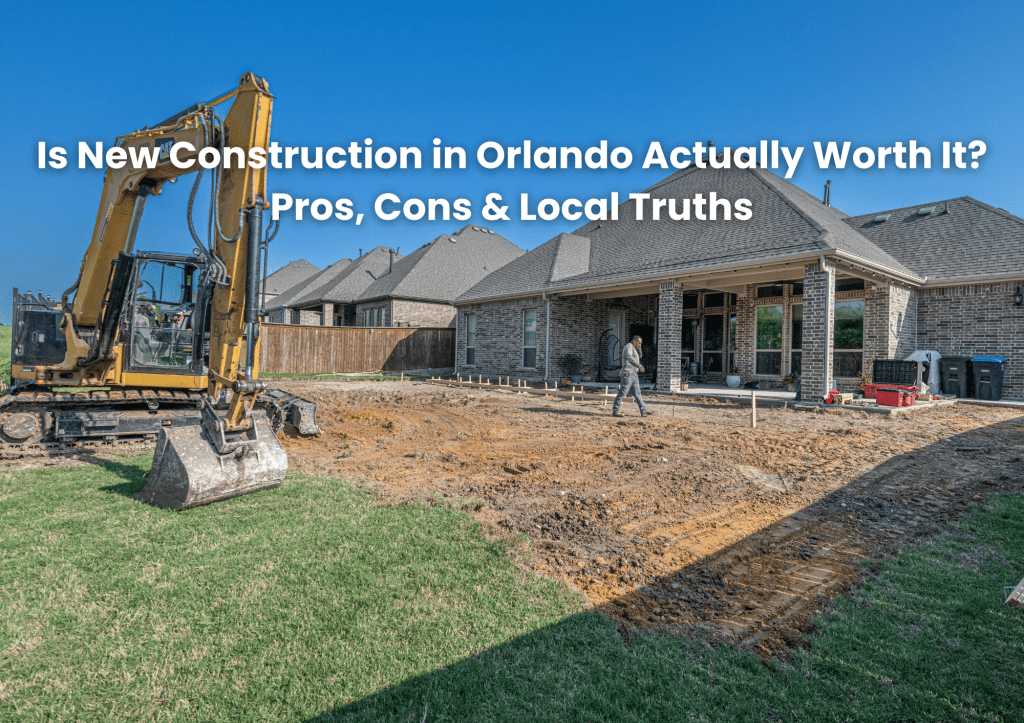
Is New Construction in Orlando Actually Worth It? Pros, Cons & Local Truths

New construction homes are everywhere in Orlando, Florida—but are they really worth it? As an Orlando real estate agent who works with both resale and new construction buyers, I always say: it depends.

Let’s talk honestly about the pros and cons of buying a new construction home in Orlando.

The Pros of New Construction in Orlando

Builder Incentives

Many builders offer incentives like closing cost assistance or rate buydowns, which can be attractive in today’s market.

Modern Design & Energy Efficiency

New homes often include open layouts, energy-efficient features, and modern finishes that buyers love.

The Cons Buyers Don’t Expect

Higher Base Prices Than Advertised

The advertised price rarely includes upgrades, lot premiums, or structural options.

Long Build Timelines

Construction delays are common due to permits, materials, or weather.

HOA and CDD Fees

Most new construction communities in Orlando come with HOA and CDD fees, which increase monthly expenses.

Who New Construction Is Best For

New construction works best for buyers who:

  • Are flexible on timelines
  • Want low maintenance
  • Plan to stay long-term

Frequently Asked Questions:

1. Are new construction homes in Orlando cheaper than resale right now?

The SEO Focus: Orlando new construction vs. resale prices The Answer: Surprisingly, yes. In 2026, the median price for new builds in Central Florida has stayed competitive—and often lower—than existing homes. This is largely due to builders increasing inventory in areas like St. Cloud and Davenport to meet demand. While a resale home may have a lower “sticker price,” once you factor in the cost of a new roof, HVAC repairs, and higher insurance premiums for older Florida homes, new construction often provides a better total value.

2. What builder incentives are available for Orlando new homes in 2026?

The SEO Focus: Orlando home builder incentives / mortgage rate buydowns The Answer: To stay competitive, Orlando builders are currently offering aggressive financial packages. The most popular 2026 incentives include permanent interest rate buydowns (often bringing rates into the 5% range), and closing cost credits ranging from $10,000 to $25,000. Some builders in master-planned communities like Lake Nona or Winter Garden are also including “flex cash” that can be used for design center upgrades or to reduce the home’s sales price.

3. Is new construction in Florida better for homeowners insurance?

The SEO Focus: New construction Florida insurance savings / hurricane building codes The Answer: Absolutely. Because new Orlando homes are built to the latest Florida Building Codes, they qualify for significant “wind mitigation” discounts. Features like hurricane straps, impact-resistant windows, and reinforced garage doors make these homes much cheaper to insure than homes built before 2002. In many cases, insurance for a new build can be 30–50% less than a similarly sized resale property, saving you thousands of dollars annually.

4. What are the hidden costs of buying a new home in Central Florida?

The SEO Focus: Hidden costs of new construction / Orlando CDD fees The Answer: The biggest “hidden” cost in Orlando is the CDD fee (Community Development District), common in newer areas like Horizon West. This fee covers neighborhood infrastructure and is added to your property taxes. Additionally, remember that the “starting price” rarely includes the lot premium or landscaping/window treatments, which many builders leave to the buyer. Always budget an extra 2%–5% of the base price for these essential finishing touches.

Meet Fabiola Meneses

I’m a bilingual Orlando REALTOR® with Wemert Group Realty, and I’ve been helping families navigate the Central Florida market since 2014. With a background in civil engineering, I offer my clients more than just market data—I provide a technical eye for construction and a precise approach to negotiations. Whether you are selling or buying a home in Orlando. my goal is to ensure you aren’t just getting a high offer, but the right offer for your future.

Don’t leave your home sale to chance. Let’s work together to find the offer that truly meets your goals.

What Orlando Sellers Regret After Accepting the Highest Offer

What Orlando Sellers Regret After Accepting the Highest Offer

As a Realtor in Orlando, I often see sellers celebrate when they receive the highest offer on their home—only to face unexpected regrets later. While getting top dollar feels like a win, there are several factors that can make even the best offer less than ideal.

1. Ignoring Terms and Contingencies
The highest offer isn’t always the most reliable. Sometimes, sellers overlook contingencies that could complicate the sale, like financing or inspection contingencies. A buyer might get approved for a mortgage but still face hurdles, which can delay or even derail the closing.

2. Overlooking Flexibility Needs
Sellers often forget to consider their own timeline and needs. An offer with the highest price may come with a closing date that doesn’t align with the seller’s move, creating unnecessary stress and logistical challenges.

3. Not Considering Buyer Reliability
A high offer is attractive, but not all buyers are equally dependable. Sellers sometimes regret not evaluating the buyer’s financial stability or motivation to close. A less-than-serious buyer can create headaches even with the “best” offer.

4. Waiving Negotiation Opportunities
Focusing solely on price can cause sellers to miss out on better overall terms. Sometimes slightly lower offers with fewer contingencies, faster closings, or more favorable conditions end up being smoother and safer for the seller.

5. Emotional Decision-Making
It’s easy to get caught up in the excitement of a high offer, but emotion-driven decisions can lead to regret. Taking time to review the complete package and consult with a professional can prevent costly mistakes.

Bottom Line
Accepting the highest offer in Orlando doesn’t always mean the sale will be stress-free or perfectly aligned with your goals. Having an experienced Realtor by your side ensures that you’re looking at the full picture—price, terms, contingencies, and timing—so you make the smartest decision.

Frequently Asked Questions

1. If I don’t take the highest offer, am I “leaving money on the table”?
Not necessarily. A high offer that falls through after three weeks of inspections costs you more in carrying costs (mortgage, utilities, taxes) and market momentum. Often, a slightly lower offer with a “clean” contract (fewer contingencies and a solid down payment) results in more actual cash in your pocket at the closing table because there is less risk of credits or price re-negotiations.

2. What is the most dangerous contingency to look out for in Orlando?
While every sale is different, financing contingencies paired with a low down payment are often the most unpredictable. If a home doesn’t appraise for that record-high offer price, the deal could collapse unless the buyer has the cash to bridge the gap. Always look for an “Appraisal Gap Guarantee” if you’re leaning toward a high-priced offer.

3. How do I know if a buyer is actually “reliable” before I sign?
We look for “proof of funds” and a strong Pre-Approval Letter (not just a pre-qualification). Additionally, your Realtor can call the buyer’s lender to gauge how far along they are in the underwriting process. A buyer who has already had their income and assets verified is much more reliable than one who just started the process.

4. Can I ask a high-offer buyer to match the terms of a lower, cleaner offer?
Absolutely. This is called a counter-offer. If Buyer A offers the most money but has a 60-day closing window, and you need to move in 30 days, we can counter-offer on the timeline. You have the power to negotiate the “price” and the “terms” simultaneously to create your ideal scenario

Meet Fabiola Meneses

I’m a bilingual Orlando REALTOR® with Wemert Group Realty, and I’ve been helping families navigate the Central Florida market since 2014. With a background in civil engineering, I offer my clients more than just market data—I provide a technical eye for construction and a precise approach to negotiations. Whether you are selling or buying a home in Orlando. my goal is to ensure you aren’t just getting a high offer, but the right offer for your future.

Don’t leave your home sale to chance. Let’s work together to find the offer that truly meets your goals.

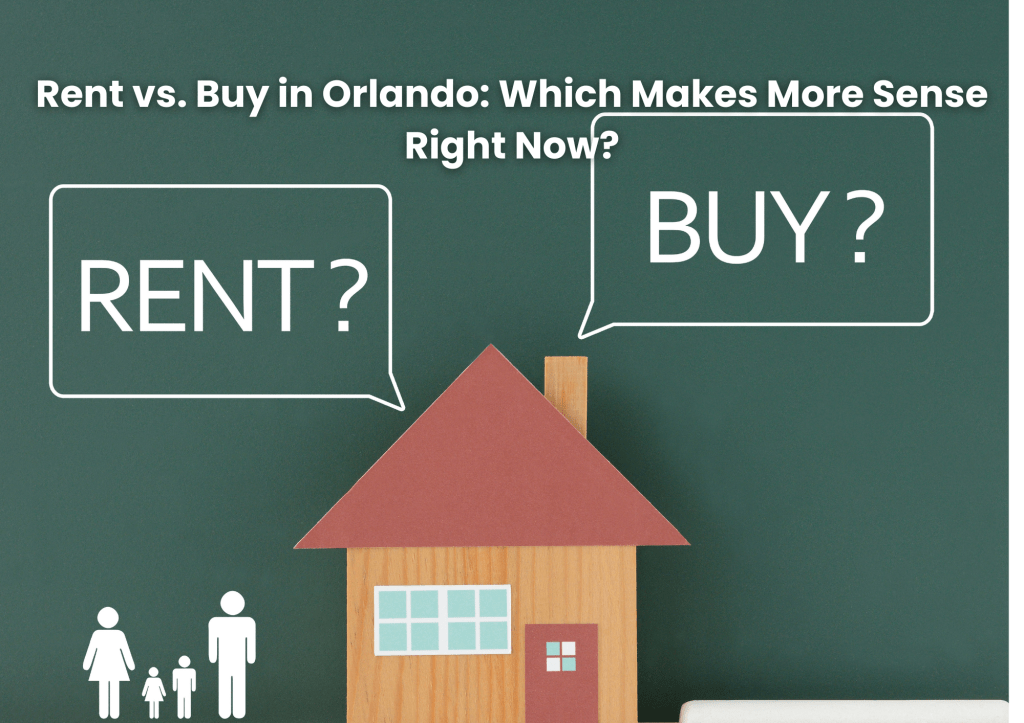
Rent vs. Buy in Orlando: Which Makes More Sense Right Now?

Rent vs. Buy in Orlando: Which Makes More Sense Right Now?

One of the most common conversations I have with clients in Orlando is this:

“Should I keep renting, or does it make more sense to buy a home right now?”

The answer depends on your financial situation, lifestyle, and long-term goals—but in today’s Orlando market, buying is often more attainable and strategic than many renters realize. Let’s break it down clearly.


The Current Rental Market in Orlando

Orlando’s rental market has remained competitive over the last several years. Rent prices have increased significantly, and many tenants are experiencing:

  • Annual rent increases
  • Limited control over lease renewals
  • No return on monthly payments
  • Fewer long-term housing protections

When you rent, your monthly payment helps cover your landlord’s mortgage—but it does not build equity or long-term wealth for you.


What Buying a Home in Orlando Looks Like Today

Despite higher interest rates compared to past years, buying a home in Orlando is still very realistic—especially with today’s loan options.

Many buyers are surprised to learn that:

  • You do not need 20% down
  • Monthly mortgage payments can be comparable to rent
  • Down payment assistance programs may be available
  • Homeownership creates long-term financial leverage

In many cases, buyers who qualify for FHA or conventional low-down-payment loans can enter the market sooner than expected.


Rent vs. Buy: Key Differences

Monthly Payments

  • Rent: Subject to increases at renewal
  • Buy: Often more stable, especially with a fixed-rate mortgage

Equity

  • Rent: No equity built
  • Buy: Every payment contributes toward ownership

Control & Stability

  • Rent: Limited control over property and lease terms
  • Buy: Freedom to customize and long-term housing security

Tax Advantages

  • Rent: No tax benefits
  • Buy: Potential deductions and long-term tax advantages (consult your tax professional)

When Renting May Make Sense in Orlando

Renting can still be the right choice if:

  • You plan to relocate within the next 12 months
  • Your income is currently unstable
  • You are rebuilding credit
  • You are not ready for maintenance responsibilities

Renting is not “bad”—but it should be a strategic decision, not the default due to misinformation about buying.


When Buying Often Makes More Sense

Buying a home in Orlando may be the better option if:

  • You plan to stay in the area 2+ years
  • You want predictable housing costs
  • You are tired of rising rents
  • You want to build equity instead of paying rent
  • You qualify for low down payment or assistance programs

Orlando continues to grow in population, employment, and infrastructure—factors that support long-term property values.


The Orlando Advantage

Orlando remains one of Florida’s strongest markets due to:

  • Job growth across healthcare, tech, tourism, and logistics
  • Population growth from in-state and out-of-state buyers
  • Strong rental demand (even for future investors)
  • Diverse housing options across price points

For many renters, buying now—even with a modest down payment—can be a smarter long-term financial move than waiting.


Final Thoughts

If you’re currently renting in Orlando and wondering whether buying makes sense for you, the best next step is not guessing—it’s running the numbers based on your specific situation.

As an Orlando real estate agent, I help clients compare real monthly costs, explore financing options, and determine whether renting or buying aligns better with their goals.

If you’re ready to evaluate your options or simply want a clear, honest comparison based on today’s market, I’d be happy to help.

¿Se puede comprar una casa en Orlando con un pago inicial pequeño?

Una de las preguntas más comunes que escucho de compradores en Orlando es: “¿Realmente es posible comprar una casa con un pago inicial pequeño?”

La respuesta corta es . Como agente de bienes raíces que trabaja diariamente con compradores en la Florida Central, puedo decir con total confianza que comprar una casa en Orlando con un bajo pago inicial no solo es posible, sino más común de lo que muchas personas creen.

¿Qué se considera un pago inicial “pequeño”?

Tradicionalmente, muchas personas piensan que necesitan un 20% de pago inicial para comprar una casa. Aunque esto puede ser beneficioso en algunos casos, no es un requisito para la mayoría de los compradores hoy en día.

En el mercado actual, un pago inicial pequeño suele estar entre 0% y 5%, dependiendo del tipo de préstamo y del perfil financiero del comprador.

Opciones de préstamos con bajo pago inicial en Orlando

Existen varios programas hipotecarios que permiten comprar una casa en Orlando con menos dinero inicial:

1. Préstamos FHA (3.5% de pago inicial)
Los préstamos FHA son una de las opciones más populares para compradores primerizos y también para compradores recurrentes. Permiten un pago inicial desde el 3.5% y ofrecen requisitos de crédito más flexibles que los préstamos convencionales.

2. Préstamos Convencionales (3% de pago inicial)
Muchos compradores se sorprenden al saber que algunos préstamos convencionales requieren solo un 3% de pago inicial, especialmente cuando se trata de una residencia principal. Son ideales para compradores con buen historial crediticio.

3. Préstamos VA (0% de pago inicial)
Si eres veterano o miembro activo de las fuerzas armadas y calificas, los préstamos VA permiten comprar una casa en Orlando con 0% de pago inicial y sin seguro hipotecario privado.

4. Préstamos USDA (0% de pago inicial)
Algunas zonas fuera del núcleo urbano de Orlando pueden calificar para préstamos USDA, los cuales ofrecen financiamiento del 100% para compradores elegibles.

Programas de asistencia para el pago inicial en la Florida Central

Además de los préstamos, existen programas de asistencia para el pago inicial a nivel estatal y local que pueden ayudar a cubrir parte o la totalidad del pago inicial y, en algunos casos, los costos de cierre. Estos programas suelen basarse en ingresos y disponibilidad de fondos.

Como tu agente, te ayudo a identificar los programas para los que podrías calificar y te guío durante todo el proceso.

¿Es buena idea comprar con un pago inicial pequeño?

Comprar una casa con un pago inicial bajo puede ser una excelente estrategia, especialmente en un mercado en crecimiento como Orlando. Esto te permite:

  • Entrar al mercado inmobiliario más rápido
  • Conservar efectivo para emergencias o mejoras
  • Comenzar a crear patrimonio en lugar de pagar renta

Aunque un pago inicial pequeño puede implicar un seguro hipotecario, en muchos casos este es un costo temporal y los beneficios a largo plazo de ser propietario superan ampliamente ese gasto.

Reflexión final

Si has pospuesto la compra de una casa en Orlando porque piensas que no tienes suficiente dinero ahorrado para un pago inicial grande, te invito a explorar tus opciones. Es muy posible que estés más cerca de ser propietario de lo que imaginas.

Como agente de bienes raíces en Orlando, mi objetivo es educarte, asesorarte y representarte en cada etapa del proceso —desde entender tus opciones de financiamiento hasta encontrar la propiedad ideal.

Si estás considerando comprar una casa en Orlando y quieres saber qué opciones tienes con un pago inicial pequeño, con gusto puedo ayudarte.

Can I sell my house without a realtor?

Short Answer Breakdown

  • Selling without a realtor is legal in Florida
  • You control pricing, marketing, and negotiations
  • You must handle contracts, disclosures, and deadlines yourself
  • Buyers may still be represented by agents
  • Mistakes can cost more than commissions saved

Expanded Explanation

Selling a home without a realtor appeals to many Orlando homeowners because it feels straightforward: list the home, find a buyer, and avoid paying commission. In practice, FSBO transactions shift every professional responsibility onto you as the seller.

In Orlando, buyers are active, but they are also highly informed. Many are represented by agents, using standardized contracts, inspections, financing contingencies, and strict timelines. When you sell without representation, you are expected to understand and manage all of this.

Pricing is often the first challenge. Online estimates can give a range, but they don’t reflect buyer psychology, current competition, or how condition and concessions impact final price. Overpricing leads to extended time on market. Underpricing can leave money on the table.

Marketing is another hurdle. Most buyers search through the MLS, which FSBO listings do not automatically access unless you pay for limited-service exposure. That means fewer qualified buyers see your home, even in a strong Orlando market.

Negotiation and paperwork are where most FSBO sellers feel the pressure. Florida contracts are legally binding, deadlines matter, and disclosures are mandatory. A missed detail can delay closing, create liability, or cause a deal to fall apart late in the process.


Common Misconceptions About FSBO Sales

Many homeowners assume selling without a realtor simply means skipping marketing help. In reality, you are replacing an entire system.

One common misconception is that buyers will trust the process more because there is “no agent pressure.” In practice, buyers often become more cautious without a neutral professional managing the transaction.

Another misunderstanding is that saving commission automatically means netting more money. If pricing, negotiation, or inspection handling goes wrong, the financial outcome can be worse than using representation.

Some sellers also believe contracts are just templates. Florida real estate contracts are enforceable agreements with strict performance dates. Small mistakes can have real consequences.


Important Considerations for Orlando Sellers

Orlando’s market includes first-time buyers, investors, relocation buyers, and cash purchasers. Each group negotiates differently. Without representation, you must recognize these differences and respond appropriately.

Disclosure requirements are another critical factor. Florida law requires sellers to disclose known material defects. Failing to do so can create legal exposure even after closing.

You should also consider time and emotional bandwidth. Showings, negotiations, inspection requests, appraisal issues, and lender conditions all require fast, informed responses. Many FSBO sellers underestimate how consuming this process becomes.

Finally, even if you sell without a realtor, the buyer may still have one. That agent is legally obligated to protect the buyer’s interests — not yours.


FAQ

Is it legal to sell a house without a realtor in Florida?

Yes. Florida law allows homeowners to sell their property without using a real estate agent.

Do I still need a lawyer if I sell FSBO?

While not legally required, many FSBO sellers hire a real estate attorney to review contracts and closing documents.

Will buyers avoid my home if it’s FSBO?

Some buyers are open to FSBO homes, but many rely on agents and MLS searches, which can limit exposure.


Final Thoughts

Selling your house without a realtor in Orlando is possible, but it isn’t passive. You’re trading commission savings for responsibility, risk, and time. For some sellers, that tradeoff makes sense. For others, the structure and protection of professional guidance outweigh the cost.

Next Steps
If you’d like help navigating this topic, reach out to a qualified real estate professional or continue exploring helpful resources.

How to Price Your Home Correctly in Today’s Market

Wondering how to price your home correctly in today’s market so it actually sells — without leaving money on the table?

The right price isn’t about guessing or chasing the highest number you see online. It’s about positioning your home strategically so buyers respond quickly and competitively.

Why Pricing Matters More Than Ever Right Now

Today’s buyers are more informed than ever. They’re watching price reductions, tracking days on market, and comparing homes carefully before making a move. If your home is priced too high, it doesn’t just sit — it gets skipped.

When a home misses that initial window of attention, sellers often end up:

  • Reducing the price later
  • Losing negotiating leverage
  • Accepting less than they could have with the right strategy upfront

Correct pricing creates urgency. Incorrect pricing creates doubt.

The Biggest Pricing Mistake Sellers Make

One of the most common mistakes is pricing based on:

  • What a neighbor’s home sold for months ago
  • What you need to net
  • An online estimate that doesn’t reflect current buyer behavior

The market doesn’t price homes emotionally — buyers price homes based on value, condition, and comparison. Your strategy needs to do the same.

How the Right Price Is Actually Determined

Pricing your home correctly is part data, part strategy.

Here’s what truly matters:

1. Recent Comparable Sales

The strongest pricing indicators are homes that:

  • Sold recently (not last year)
  • Are similar in size, layout, and condition
  • Are in your immediate area

Active listings matter too, but sold homes show what buyers are actually willing to pay.

2. Current Competition

Your home doesn’t exist in a vacuum. Buyers will compare it to:

  • Other active listings
  • Homes with recent price reductions
  • Properties offering incentives or updates

Your price should help your home stand out, not blend in.

3. Buyer Behavior Today

In today’s market, buyers are value-conscious. Homes that feel overpriced get less showing activity, which often leads to longer market time and eventual price cuts.

The goal is to price your home where buyers feel confident making a strong offer — not hesitant or skeptical.

Why “Testing the Market” Can Backfire

Many sellers want to “try a higher price and see what happens.” The risk? The first few weeks are when your listing gets the most attention.

If buyers pass early on, they often don’t come back — even after a price reduction. Instead of testing the market, the smarter move is to enter the market aligned with it.

Strategic Pricing Creates Better Outcomes

Homes priced correctly from day one tend to:

  • Attract more qualified buyers
  • Receive stronger offers earlier
  • Spend less time on the market
  • Maintain seller leverage during negotiations

This isn’t about underpricing — it’s about positioning.

How a Local Expert Helps You Price with Confidence

Online tools can’t account for:

  • Condition differences
  • Layout advantages
  • Buyer demand in specific Orlando neighborhoods
  • Subtle shifts happening right now

As a local REALTOR® in Orlando, Florida, Fabiola Meneses helps sellers understand not just what homes sold for — but why they sold for that price and how to use that insight to your advantage.

What should buyers do before making an offer on a home?

Before you write an offer, you should prepare financially, understand the market, clarify your priorities, and have a clear strategy—so you don’t overpay, hesitate, or lose the home altogether.

Get Fully Pre-Approved (Not Just Pre-Qualified)

One of the biggest mistakes buyers make is assuming pre-qualification is enough. It’s not.

Before making an offer, you should have a full pre-approval in place. This means your income, assets, and credit have already been reviewed, not just estimated. A strong pre-approval:

  • Shows sellers you’re serious
  • Helps you move quickly when the right home comes up
  • Reduces surprises later in the process

Knowing your real numbers upfront allows you to write an offer with confidence instead of hesitation.

Understand the Local Market You’re Buying In

Every market behaves differently—and even within Orlando, conditions can vary by neighborhood, price range, and property type.

Before making an offer, you should understand:

  • How quickly homes are selling
  • Whether sellers are receiving multiple offers
  • What types of terms sellers are responding to right now

This context matters. A strategy that works in one area or price point may not work in another. As a buyer, you don’t just need to like the home—you need to know how to compete for it intelligently.

Clarify Your Must-Haves vs. Nice-to-Haves

It’s easy to get emotional when touring homes. That’s why clarity before making an offer is so important.

Ask yourself:

  • What features are non-negotiable?
  • What can you be flexible on?
  • What would cause you to walk away?

Having these answers ahead of time prevents rushed decisions and post-offer regret. It also helps you act decisively when the right opportunity appears.

Review Comparable Sales Before You Decide on Price

A smart offer is based on data, not just the list price.

Before making an offer, you should review recent comparable sales to understand:

  • What similar homes have actually sold for
  • How this home compares in condition and features
  • Whether the asking price aligns with market value

This step helps you avoid overpaying—and just as importantly, helps you avoid under-offering and losing a home you really want.

Know Your Ideal Offer Terms Ahead of Time

Price is only one part of an offer. Terms matter, too.

Before you submit an offer, you should already know:

  • Your preferred closing timeline
  • Your comfort level with contingencies
  • How flexible you can be if needed

When you know your boundaries in advance, you’re able to move quickly and strategically instead of scrambling to decide under pressure.

Talk Through Strategy Before You Write the Offer

The most successful buyers don’t wing it—they plan.

Before making an offer, it’s important to talk through:

  • Offer price strategy
  • Strengths and weaknesses of the home
  • How competitive the situation may be
  • Possible next steps if negotiations arise

As a Realtor in Orlando, Florida, I help buyers prepare before the offer stage so they feel confident, informed, and ready—not rushed or uncertain.

Final Takeaway

Making an offer is one of the most important moments in the buying process. When you prepare ahead of time—financially, strategically, and mentally—you put yourself in a stronger position to succeed and enjoy the process.

Ready to Make a Smart Offer?

If you’re thinking about buying a home in Orlando and want help preparing before you make an offer, let’s talk.


Schedule a consultation with me, Fabiola Meneses, Realtor in Orlando, Florida, and we’ll build a clear, confident plan together—so you’re ready when the right home comes along.

Orlando Housing Market Update: Trends Buyers & Sellers Need to Know Before We Enter 2026

What does the Orlando housing market look like as we head toward 2026?

As Orlando approaches 2026, the real estate market is transitioning into a more balanced and strategic phase. As a Realtor in Orlando, Florida, I’m seeing buyers gain breathing room, sellers adjust expectations, and pricing become more stable compared to the rapid shifts of recent years. Buyers are gaining breathing room, sellers are adjusting expectations, and pricing has become more stable compared to the rapid shifts of recent years.

A More Balanced Orlando Market Is Taking Shape

The Orlando housing market is no longer defined by extreme competition or rapid price jumps. Instead, you’re seeing conditions normalize. Inventory has grown, homes are taking longer to sell, and buyers are no longer feeling the same urgency to make snap decisions.

This shift doesn’t signal a weak market — it signals a healthier one. A balanced Orlando market allows both buyers and sellers to make decisions based on strategy rather than pressure.

Pricing Trends Heading Into 2026

Home prices across Orlando have largely stabilized. Rather than dramatic increases, values are holding steady with modest movement depending on property type, location, and condition.

For sellers, this means pricing accurately from the start matters more than ever. Overpricing can lead to longer days on market and potential reductions. For buyers, stable pricing offers confidence that you’re making a purchase based on value rather than fear of missing out.

What Buyers Should Know Right Now

If you’re buying in Orlando heading into 2026, the market is offering more opportunity than it has in years:

  • More available listings mean greater choice
  • Less competition allows for thoughtful decision‑making
  • Negotiations are becoming more common

You’re no longer competing against dozens of offers in most situations, which creates space to focus on long‑term goals instead of short‑term pressure.

What Sellers Need to Do to Succeed

Selling in Orlando as we approach 2026 requires a sharper strategy. Homes that are well‑presented and priced correctly still attract strong interest, but buyers are selective.

Successful sellers are:

  • Pricing based on current market conditions, not past peaks
  • Preparing their homes carefully before listing
  • Being open to negotiation and flexible terms

Positioning matters more than timing alone in today’s Orlando market.

What This Market Means for Orlando Homeowners

Whether you’re considering a move now or planning ahead, understanding these shifts is critical. Orlando’s real estate market is settling into a sustainable rhythm, creating opportunities for buyers to enter confidently and for sellers to plan smartly.

As we move toward 2026, the advantage goes to those who understand the market and act with clarity rather than urgency.

Final Takeaway

As a homeowner, buyer, or seller in Orlando, understanding where the market is heading into 2026 can help you make smarter decisions. Working with a local expert who tracks Orlando real estate trends closely can give you clarity, confidence, and a plan that fits your goals.

The Orlando housing market heading into 2026 is defined by balance, stability, and strategy. Buyers have more leverage than in recent years, and sellers who adapt to today’s conditions can still achieve strong results. Knowing where the market stands — and how to position yourself within it — is the key to making smart real estate decisions in Orlando.

Ready to Talk Strategy?

If you’re thinking about buying or selling in Orlando before we enter 2026, having a local strategy matters. I’m Fabiola Meneses, a Realtor in Orlando, Florida, and I help clients navigate the Orlando housing market with clarity and confidence.

If you want to understand what today’s Orlando real estate market means for your specific situation, let’s talk about next steps and timing that make sense for you.